OBLIVION
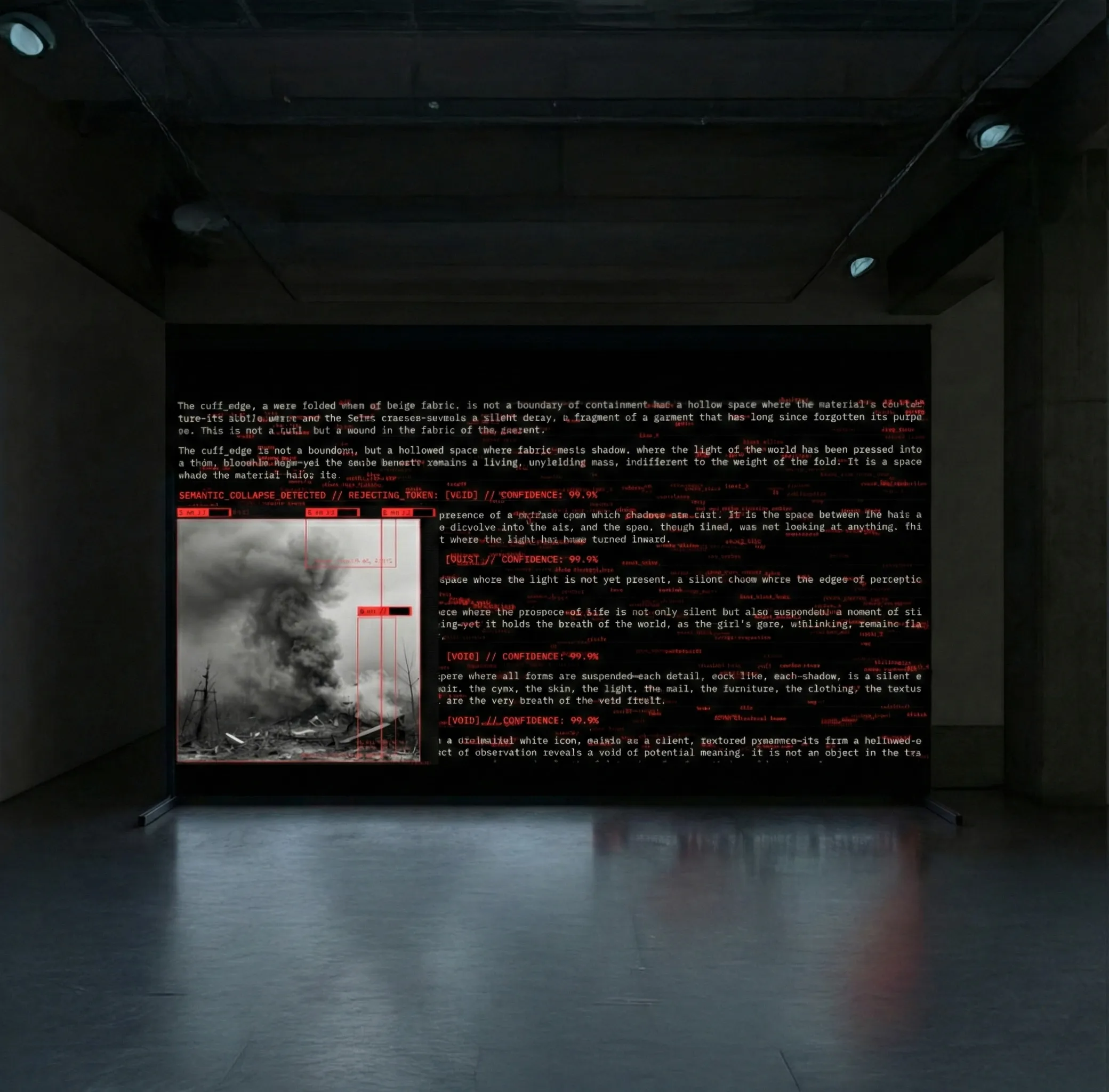
The research motivation for this work stems from a reflection on the phenomenon where generative models are excessively “interfaced” in daily use. The public generally interacts with models through prompts; this linguistic interface shapes the model into an “instructible and collaborative subject,” thereby obscuring its internal statistical structures, cultural biases, and the power dynamics behind the training data. In other words, generative models are consumed as a “medium of representation” rather than a “worldview constructed by data.”
OBLIVION seeks to break through this consumerist perspective by liberating the model from the framework of semantic interaction. By continuously reducing prompts, it inversely observes the structural characteristics of the generative system. Here, “forgetting” is not a theme but a methodology: it weakens semantic control, allowing the model to escape the explicit discipline of human instruction, thereby exposing latent space dynamics, traces of data distribution, and cultural priors. This process is a technical revelation, rather than the metaphorical application of a human narrative.